
Quick answer
Start with how many colour services you did last December. Multiply that by the grams of colour you use per service, then add your developer at your brand's mixing ratio. Add a buffer for the rush. Order early enough to beat supplier lead times and the Christmas shipping cut-offs, ideally with stock on your shelf by late November.
Every December we watch the same thing happen at the trade counter. A salon is fully booked, the colourist reaches for their best-selling brown, and the box is empty. Running out in the busiest month of the year costs you more than one tube. It costs you a rushed substitute shade, a stressed team and sometimes a client.
The good news is that ordering for Christmas isn't guesswork. You already have the numbers. This guide walks you through turning them into a stock order that covers the rush without leaving half your cash sitting on a shelf in January.
Key takeaways
- Base your order on last year's December colour services, not on gut feel.
- Weigh your bowls for a week so you know your real grams per service.
- Developer follows colour. Order it at the ratio your colour brand specifies.
- Set a reorder point for your top shades so you top up before you run dry.
- The last interstate Parcel Post from Sydney is Monday 21 December, so plan your final top-up well before then.
Why does Christmas stock planning matter so much for salons?
December is the biggest month of the year for most salons. Booking data from salon software company Phorest, covering more than 6,000 salons across several countries including Australia, found December brings in more than 10% of a salon's yearly revenue. That data is a few years old and isn't Australia-only, but anyone who has worked a Christmas Eve in a salon won't be surprised by it.
Colour is where the pressure shows up first. Over the last 90 days, permanent and semi-permanent colour made up about a third of everything salons bought from us, more than any other category. When the books fill up, colour and developer are the first things to run low.
Getting the balance right matters both ways. Too little stock means lost sales and a hit to your reputation for being reliable. Too much stock ties up money and adds storage costs, and January is typically a quieter month to be sitting on extra cartons.
How do I work out how much colour I'll use?
Work it out from your own records first. Pull last December's colour services from your booking system. Count regrowth, full head, toners and glosses separately if you can, because they use very different amounts.
Then find out how many grams your team really uses. Manufacturers don't publish a standard figure for a regrowth versus a full head. Wella's Koleston Perfect leaflet uses 60g of colour as its example, but every head and every colourist is different. The easiest fix is a cheap kitchen scale. Weigh every bowl for one normal week and you'll have an average that's yours.
Your bowls tell the truth. Weigh them for a week and your order stops being a guess.
Here's a worked example for a mid-sized salon. Swap in your own numbers.
| Step | Example | What it gives you |
|---|---|---|
| Colour services last December | 150 services | Your demand |
| Average colour per service | 60g (from a week of weighing) | 9,000g of colour |
| Convert to tubes | 9,000g ÷ 100g tubes | 90 tubes |
| Add a buffer | We used 15% in this example | About 104 tubes |
| Split by shade | Use last year's shade sales | Your order list |
The buffer is a judgement call. A newer salon with less history might want more. A salon with a supplier close by can run leaner. The shade split matters as much as the total. Many salons find a small group of shades does most of the work, so check which ones you reordered most often last summer.
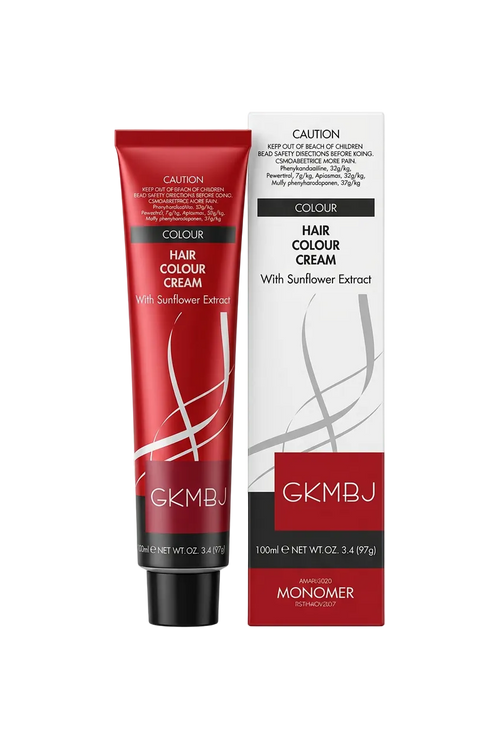
If you're on our own GKMBJ Colour 100g Our own line, there are 34 shades in the range, so it's worth running this per shade rather than per brand. We also stock salon favourites like Wella Koleston and Schwarzkopf Igora Royal if your team works across lines.
How much developer do I need?
Developer follows colour. Once you know your grams of colour, multiply by the mixing ratio your colour brand specifies.
- Wella Koleston Perfect mixes 1:1, so 60g of colour takes 60g of developer. Its Special Blondes mix 1:2.
- Schwarzkopf's Igora Royal Highlifts mix 1:2 with 9% or 12% developer.
- Wella lists a 1:2 ratio with 1.9% developer for toning and glossing.
In the example above, 9,000g of colour at 1:1 needs about 9 litres of developer before the buffer. Toners and high-lift work at 1:2 need double, so count those services separately.
Split your developer order by strength as well. For a lot of salons 20 vol is the workhorse, because it's the usual strength for grey coverage and permanent colour. Check your own records for the mix of 10, 20, 30 and 40 vol. Our peroxide guide explains what each strength does.
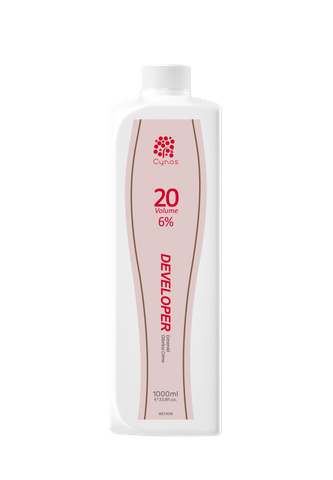
Cynos Our own line describes its cream developer as specially formulated for Cynos colour. That's a good rule for any brand. Use the developer your colour line specifies, because the ratio and processing times on the technical sheet are tested with it.
30 and 40 vol developers, lighteners and high-lift work are for trained professionals. Higher strengths lift faster and are much harsher on the scalp if they're used wrong. We sell these to salon professionals only. If you're a hairdresser or barber, apply for SalonOnline PRO to shop trade prices.
What is a reorder point, and how do I set one?
A reorder point is the stock level that tells you it's time to reorder. It's a standard inventory formula. Reorder point equals average daily usage multiplied by lead time, plus safety stock. Set one for each of your top shades and your main developer, then tick these steps off.
- Find your daily usage. Say you use 3 tubes of your best-selling brown a day in December.
- Check your lead time. Count the days from placing an order to having it on your shelf. If that's 3 days, you'll use 9 tubes while you wait.
- Add safety stock. This covers a surprise rush or a slow delivery. Say 4 tubes.
- Set the reorder point. 9 plus 4 is 13. When you're down to 13 tubes, reorder.
- Mark it on the shelf. A sticker on the shelf edge at the reorder level means anyone on the team can spot it.
When should I place my Christmas order?
Earlier than you think. Booking data from the US shows new holiday bookings start dropping off around 22 December because books are already full. Most of your Christmas colour goes on in the first three weeks of December, so aim to have the bulk of your stock on the shelf by late November.
A two-drop plan works well. Place your main order in early to mid November, then top up your fastest shades in early December using your reorder points.
Keep these dates in mind.
| Date | What happens |
|---|---|
| Wed 16 Dec | Last Australia Post Parcel Post from Sydney metro to the NT |
| Fri 18 Dec | Last Parcel Post to WA |
| Mon 21 Dec | Last Parcel Post to ACT, Vic, Qld, SA and Tas |
| Tue 22 Dec | Last Parcel Post within NSW |
| Wed 23 Dec | Last Express Post within NSW and to ACT, Vic, Qld, SA and Tas |
| Fri 25, Sat 26 and Mon 28 Dec | NSW public holidays |
| Fri 1 Jan | New Year's Day public holiday |
These are Australia Post's 2026 Christmas sending dates from Sydney metro. Regional areas need a few extra days. Monday 28 December is an additional NSW public holiday because Boxing Day falls on a Saturday, so many suppliers will have a short week between Christmas and New Year.
Ordering from us. We dispatch the next business day on orders placed before 4pm, and shipping is free on orders over $200. Sydney salons can also use click and collect at Lansvale or Seven Hills. [KAT TO ADD: Christmas closure dates and last order date for pre-Christmas dispatch.]
How should I store extra colour and developer over summer?
Store colour and developer somewhere cool and dark with the caps closed tightly. Never pour unused developer back into the bottle. Use mixed colour straight away and throw out what's left in the bowl. That's standard manufacturer guidance, and it doesn't change in the rush.
Heat matters more than most people realise. Industrial safety data for hydrogen peroxide shows it breaks down about twice as fast for every 10°C rise in temperature. That data covers industrial peroxide, not salon developer, but the chemistry is the same. A storeroom that bakes in a Sydney summer isn't the place for your backup cartons.
Colour keeps well if it's unopened and stored properly. Goldwell, for example, guarantees its unopened colour for four years and notes that heat or cold shortens that. Other brands set their own dates, so check the pack. Rotate stock as it comes in, with new cartons at the back and older tubes at the front.
What else runs out in December?
Sundries. Nobody plans for tint bowls and clips, and everyone runs short. A busy colourist working back-to-back appointments needs enough bowls and brushes to keep going while the last set is washed. Count yours before the rush.
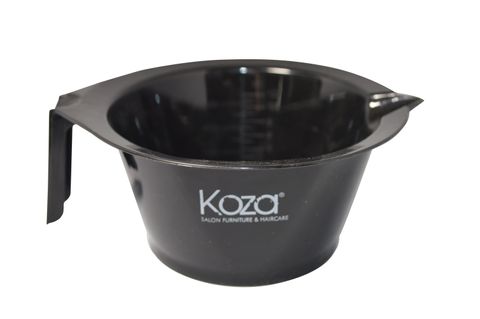
Koza Our own line covers most colour-bench basics. A tube squeezer is a small thing that earns its keep in December, because the last few grams in every tube add up across a hundred services.
Don't skip allergy tests in the rush. Australian hair dye labels must warn that a preliminary test should be made, following the directions. Manufacturers such as Wella say to do the allergy test 48 hours before colouring, including for every new client. December brings a lot of new faces, so book their tests in late November and follow the instructions on the brand you use.
Every salon does this a little differently. If you've got a system that works, like a shelf sticker, a spreadsheet or a supplier who always comes through, tell us in the comments. Other salon owners will thank you.
Questions we get asked
How many tubes of colour does a salon use in a month?
It depends on your number of colour services and how much your team mixes per client. Count last year's colour services for the same month, multiply by your average grams per service, then divide by your tube size. A week of weighing bowls gives you an accurate average.
How far ahead should I order for Christmas?
Aim to have most of your Christmas stock on the shelf by late November, because most colour work happens in the first three weeks of December. Place a main order in early to mid November, then top up your fastest shades in early December.
How long does unopened hair colour last?
It depends on the brand. Goldwell, for example, guarantees its unopened colour for four years when stored properly. Check the date or batch information on your pack, keep stock somewhere cool and dark, and use older tubes first.
Is it okay to keep developer in a hot storeroom?
It's best not to. Hydrogen peroxide breaks down faster as temperature rises. Industrial data shows the rate roughly doubles for every 10 degree rise. Keep developer somewhere cool and dark with the cap tightly closed.
Do I still need to allergy test clients during the Christmas rush?
Yes. Australian hair dye labels must warn that a preliminary test should be made, and manufacturers such as Wella specify an allergy test 48 hours before colouring. Book tests for new clients in late November so the rush doesn't push them aside.
Sources
- Research proves December is biggest sales month for salons. Salon Today, Phorest data, about 2019.
- Data confirms October 17 begins the holiday salon appointment rush. Salon Today, Phorest data (US), 2019.
- Ways to prepare your salon this busy season. Kitomba, 2025.
- Inventory management, HSC Business Studies. Cambridge University Press.
- Reorder Point. Dennis Bricker, University of Iowa.
- Koleston Perfect leaflet. Wella Professionals.
- Five expert techniques with Koleston Perfect. Wella Professional Store, 2024.
- IGORA ROYAL Highlifts 10-0. Schwarzkopf Professional.
- Color Perfect Creme Developer 20 Volume. Wella Professional Store.
- Safety and Handling of Hydrogen Peroxide. Solvay, 2019.
- Lifespan of products. Goldwell.
- Scheduling delegate's final decision on hair dye warnings. Therapeutic Goods Administration.
- Allergy Alert Test. Wella Professionals.
- Christmas sending dates. Australia Post, 2026.
- Public holidays in NSW. NSW Government, 2026.
This article is general education for salon professionals, not financial or medical advice. For allergic reactions or scalp problems, see your GP or a dermatologist.
The products we mention

Keep reading
Hair Botox: The Science Behind the Trend, Salon Advice and Aftercare
What is hair botox, and is it really new? Explore the science of conditioning, salon questions, professiona...
How to pick the right peroxide for every colour job
What 10, 20, 30 and 40 volume actually do, how to match developer to the job, and the mistakes we hear abou...
Education
Colour theory, technique and troubleshooting, explained the way a colourist would.
Questions, tips or a different take?
Hairdressers and hair lovers both welcome. We read every comment and our team replies to questions.